


What used to take months and cost tens of thousands of dollars can now be completed in days by a single AI-proficient CU leader.
This week, I cover:
How one marketer built a Credit Union website in days with AI
First SEC filing ever triggered by shadow A
Citadel Credit Union rebuilt digital onboarding to get AI-ready
Read time: 9 minutes

Top Stories
The biggest news this week…
1) How one marketer built a Credit Union website in days with AI
Credit Union websites take months to build and cost tens of thousands of dollars to redesign. For smaller Credit Unions with conservative budgets, this often means being stuck with outdated websites.
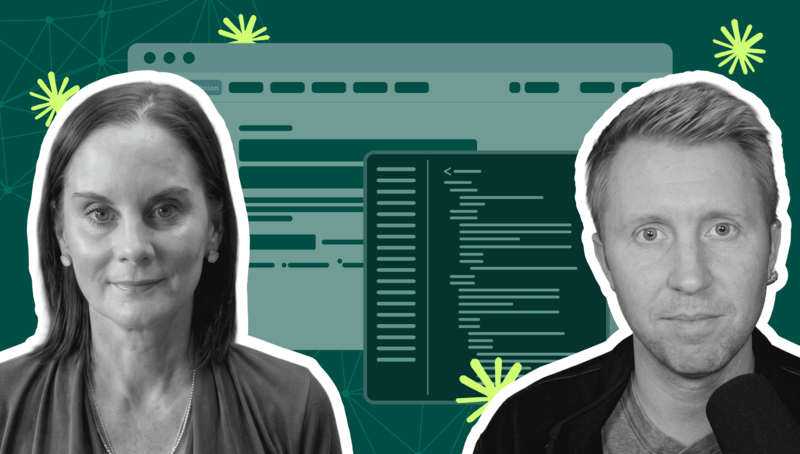
Derik Krauss at Digital Growth Institute skipped the traditional process entirely. He used Claude Design, a new AI-native design tool from Anthropic, to generate full website pages in code from scratch. No WordPress or CMS necessary (although he wouldn’t currently recommend getting rid of those). Just AI writing the code directly.
The key was feeding AI real performance data first. Krauss fed Claude data from 140 A/B tests his team has run on financial institution websites over the years. Sixteen of those tests were specific to checking account pages and showed which design patterns drive higher conversions. One test at Centricity Credit Union found that making rates visible and placing a calculator next to them boosted application starts by 50%.
He built a full prototype for American Partners Federal Credit Union in a few days of part-time work. To prove the speed, he generated a new youth checking page from scratch in minutes. Claude Design created the layout and copy. Claude Code converted it into a deployable page. Vercel pushed it live to a real URL.
The AI also generates a design rationale explaining every decision it made on the page. That rationale ties back to the A/B test data, giving marketers a documented reason behind every layout choice.
Krauss estimates this approach will make building top-tier websites 10x faster and 10x cheaper. (link)
2) First SEC filing ever triggered by shadow AI use
One employee at a Pennsylvania community bank pasted customer data into an unapproved AI tool. That single action triggered possibly the first SEC cybersecurity filing ever caused by shadow AI at a financial institution.
CB Financial Services, parent of Community Bank in Pennsylvania, disclosed the incident in a Form 8-K filed with the SEC on May 11. An employee fed customer names, Social Security numbers, and dates of birth into an unauthorized AI app while building a presentation. The bank already offered an approved AI tool with issued accounts. But the employee still used a personal account on an unapproved platform.
No hacker was involved. No systems were breached. The employee logged in with valid credentials and had legitimate access to the data. The bank caught the upload early and contacted the AI vendor to prevent the data from training the model. The file and all prompts were deleted.
But the damage was already done from a compliance standpoint. CB Financial filed under Item 1.05, which the SEC reserves for incidents a company has judged to be material. That single employee action triggered three separate obligations at once. The SEC disclosure was one. A 36-hour notice to the bank’s primary federal regulator was another. Customer notification under the Gramm-Leach-Bliley Act was the third.
American Banker confirmed this is the first 8-K on record to cite “unauthorized artificial intelligence” as the cause of a cybersecurity incident.
Since the incident, the bank has blocked unapproved AI domains, tightened employee access to customer data, and expanded its data security policies. Wilson Sonsini, the law firm that flagged the filing, warned that sensitive data “is being input into unauthorized AI tools” right now across the industry. (link)
3) Citadel Credit Union rebuilt digital onboarding to get AI-ready
When Citadel Credit Union expanded its charter to eight states, most new markets had no physical branches. That meant a 28-minute onboarding process with low funding rates was now the only first impression they had. Citadel Credit Union knew its onboarding experience was leaking members. Applications took too long. Funding rates were weak. And too much of the process still ran on paper.
Then in February, Citadel expanded its charter from a five-county Philadelphia footprint to all of Pennsylvania and seven surrounding states. In most of those new markets, there are no physical branches. Digital became the only front door.
But Rowan saw a deeper problem. Citadel’s digital channels had been built piecemeal over years. Online, mobile, phone, and email systems didn’t talk to each other. For AI to be truly excellent, she said, you need to step back and holistically rewire how data flows and how work gets done.
SVP and Chief Digital and Transformation Officer Courtney Rowan led the rebuild. Her team moved to non-documentary onboarding, eliminating paper signatures and manual ID collection. Digital verification now runs more checks on identity than a human reviewing a physical ID. Members who trigger a flag can upload a photo of their ID or complete a selfie check without leaving the digital flow.
The results blew them away. Funnel conversion jumped 212% year over year. Digital account funding rose 123%. Digital prospect volume grew 286%. Low-cost deposit accounts grew 116%. Application cycle time dropped 58%. New member applications completed 25% faster. Existing members adding products finished 73% faster.
With that foundation in place, Citadel is now building the AI layer on top. The Credit Union is replacing its fragmented martech stack with a unified customer data platform and customer experience platform. Rowan calls AI the “connective tissue” that will turn separate channels into one seamless member experience. The goal is to stop marketing to segments and start responding to individual member behavior in real time.
She also stood up an AI innovation steering committee with about 15 employees across the organization. It runs on three pillars: governance, education, and enablement. Governance sets the guardrails. Education meets every employee where they are on the AI comfort spectrum. Enablement identifies specific use cases that solve real business problems. (link)

Tips & Use Cases
Learn to apply AI…
3 Credit Unions use Alkami + Glia AI to turn service into loan growth: Heartland CU cut handle time 40% and boosted capacity 42%. Service 1st FCU’s voice AI fully handles 37% of calls, saving 69 hours per week. Heritage FCU hit 151% of its loan target with 25% less staff by shifting employees from routine calls to revenue work. (link)
Fraud is now a trust problem, not just losses: A PYMNTS report found 82% of Credit Union members choose payment methods based on which option feels most secure. Meanwhile, 77% of Credit Unions experienced unauthorized network access in the past year, with 56% naming cybersecurity as their top concern. (link)
5 lenses for responsible AI procurement: Genevieve Smith of UC Berkeley’s Responsible AI Initiative recommends evaluating AI tools through: 1) bias, 2) privacy, 3) transparency, 4) accountability, and 5) sustainability. Credit Unions adopting AI for lending or member services can use this framework to vet vendors before signing contracts. (link)
How Verapath deploys AI governance built for Credit Unions: Verapath installs its AI platform directly in a Credit Union’s own cloud environment, with built-in compliance mapped to NCUA and FFIEC requirements. The system includes over 100 agents for member engagement, KYC, and fraud detection with full audit trails. (link)
Federal law still requires a human on every mortgage: A new MBA white paper found AI can handle most of the mortgage lifecycle, but federal law still requires a licensed human on every transaction. The authors warn that naming a loan officer as a contact while AI runs the process could create a risk of Unfair, Deceptive, or Abusive Acts or Practices. (link)
nCino CEO built a custom AI agent stack in 90 minutes: Sean Desmond used Claude to draft a full agent spec that replaced static dashboards with real-time competitive intel, pipeline alerts, and customer satisfaction signals. His engineers said it matched a three-week requirements doc. Every nCino employee now has a Claude license. (link)
Summit CU exec shares where AI helps and where it falls short: VP James Grenon uses ChatGPT, Claude, and Gemini daily for presentations, reports, and project planning. But during his Credit Union’s core system conversion, he found that communication, patience, and team support carried the project more than any tool. (link)
Skip-a-pay may be the best first test for agentic AI: Most Credit Unions still process payment deferrals by hand, and slow turnaround can push members into delinquency before staff responds. An AI agent can check eligibility in real time and complete the transaction, but only if a deterministic decision engine handles compliance underneath the conversational layer. (link)
Bored AI reviewers are now banking’s top human risk: A Wolters Kluwer survey of 230 bank professionals found 34% rank automation bias as their biggest AI safety concern. When AI outputs are right 99% of the time, reviewers tune out. Fixes include rotating review teams, injecting test errors, and designating a weekly “AI skeptic” to catch what others miss. (link)
BofA CEO says 80% AI accuracy is worth zero to a bank: Brian Moynihan says the bank spends $4B a year on emerging tech, with AI accuracy as the top priority over efficiency. Erica, its AI assistant, handles 200M queries per quarter across 110 systems but is constrained to 700 verified question types to guarantee correct answers. (link)
Efficiency-only AI will cost you relationships: Forrester predicts over half of consumers under 50 will use AI for financial decisions, putting institutions focused only on efficiency at risk. The fix is tracking relationship health indicators like engagement, wallet share, and loyalty instead of just productivity metrics. (link)
Accenture says late AI adopters can still leapfrog competitors: Banking AI lead Keri Smith says democratized tools and published blueprints make it possible to skip the experimentation phase others spent years on. The key shift: move AI decisions out of a central team and into business units, while keeping cross-bank communication to avoid siloed agentic deployments. (link)
How to show up when consumers ask AI for a bank: Stop marketing products by internal names and start mapping content to how members talk. Instead of “HELOC,” think “home renovation financing” or “managing rising expenses.” EMARKETER research found AI recommendations reward clear positioning, strong reviews, and consistent digital sentiment over size or ad spend. (link)
KPMG rolls out Claude to 276,000 employees: KPMG is deploying Anthropic’s Claude across its entire global workforce for client work in tax, private equity, and cybersecurity. Anthropic’s own CFO says his finance team has built 150 Claude skills, with statutory financial statements now produced through AI. (link)
ING puts AI agents on mortgage applications: ING piloted an AI agent in the Netherlands that analyzes mortgage applications and suggests next steps, with a human employee making every final decision. The bank is now scaling the assistant across its full mortgage operations. (link)
Lloyds uses AI agents to catch scams live: Lloyds Banking Group runs multiple AI agents during customer calls to handle identity checks, transaction analysis, and scam risk assessment in real time. A new Scam Check tool will soon ask customers to upload screenshots of purchases so AI can flag known scam patterns. (link)
How to structure the human + AI workforce: Rewrite role descriptions to split human tasks from AI tasks. Set decision thresholds for what AI handles alone versus what needs human sign-off. Then standardize when and how humans intervene. Banks using this model saw 20-40% cost reduction on frontline teams without cutting headcount. (link)
Experian says AI scales at the speed of trust: Experian’s research across 800 organizations found that only 2% are comfortable with fully autonomous AI decisions, calling it a trust problem, not a technology one. The company advises starting with one high-value workflow and building on your data foundation before expanding. (link)
AI can write your ad strategy in 90 seconds but can’t run it: Most Credit Unions lose budget in the gap between AI-generated plans and actual campaign execution, since 20-40% of digital ad traffic has quality issues. Audit which tools plan versus execute, calculate cost per acquisition by platform, run a geographic traffic audit on the last 90 days, and connect your CRM suppression list to every active ad platform. (link)
Grasshopper adds AI treasury tools for business clients: Grasshopper Bank launched a treasury investing service with robo-adviser Waldo, connecting business clients to portfolio management through its digital platform. The offering includes Waldo’s AI Advisor for automated insights, with a $250,000 minimum balance to access the system. (link)
BBVA and AWS build new AI model operations framework: BBVA built a new MLOps framework with AWS that automates the transition of machine learning models into production while keeping audit trails intact. Pilot projects have reduced development times by 20% to 75% and cut infrastructure costs by 40% to 55%. (link)

Funding Spotlight
Where the money is flowing for innovation…
Ramp raises $750M Series F at $44B valuation to manage AI spending: The corporate spend platform hit $1B in annualized revenue with 70,000+ enterprise customers. Ramp is now building Token Spend Management tools as its largest AI spenders see costs double month over month. Valuation jumped 175% in one year. (link)
Titan raises $3M for banking-native AI platform: Titan’s models are trained specifically on banking workflows and data, serving banks, Credit Unions, and fintechs. The company has tripled its live ARR since exiting stealth in October 2025. (link)
Capsa AI raises $18M Series A for private capital AI platform: Co-led by TX Ventures and Pivot Investment Partners, the round follows 14x year-on-year ARR growth and 100% customer renewal. Capsa embeds agentic AI across the full fund lifecycle, from sourcing and due diligence to portfolio monitoring and back-office operations. (link)
Willow raises $7M seed for AI agent security: The Israeli startup governs and controls AI agents in enterprise environments, already deployed across 5,000 Wix employees. The platform supports Claude, ChatGPT, Gemini, and Codex with over 1,000 connectors. (link)
WealthReach raises $1M seed to scale AI growth platform for advisors: The funding supports an AI-powered organic growth platform that helps RIAs and wealth management firms improve online visibility and convert prospects into clients. The company recently launched “Living Sites,” advisor websites that continuously optimize for search and AI discoverability. (link)
AlphaSense raises $350M at $7.5B valuation for AI market intelligence: The platform serves 7,000+ enterprises with AI-powered insights drawn from over 500M business documents, including equity research, earnings calls, and regulatory filings. Alongside the raise, AlphaSense launched SuperAnalyst, an AI agent that autonomously executes complex financial and strategic workflows. (link)
Opal Security raises $23M to govern human and AI agent identities together: The platform brings AI agents, service accounts, and human users into a single access governance framework with policy-as-code controls and automated reviews. Customers include Databricks, which processes 86,000 just-in-time access requests through Opal. (link)

Keeping up with Tech
The latest in fintech and tools…
Q2 launches AI assistant for Credit Union support teams: The platform embeds a conversational AI agent directly into Q2’s digital banking tools, letting staff investigate login issues, transaction inquiries, and account reviews without switching systems. Stanford FCU cut one support request from two hours to under a minute during the pilot. (link)
Anthropic launches Claude Fable 5 for complex, long-running AI tasks: The model handles multi-day workflows with context spanning millions of tokens, priced at $10 per million input tokens. Stripe used it to migrate a 50M-line codebase in one day, a project that previously required a team of engineers working over two months. (link)
Mastercard launches payments for AI agents: Agent Pay for Machines lets AI agents and automated systems conduct transactions across Mastercard’s global network, including microtransactions worth fractions of a cent. Partners include Adyen, Stripe, Coinbase, Cloudflare, and Santander-owned Getnet. (link)
Visa and OpenAI partner on agent payments: Visa will integrate its credentialing and security tools into ChatGPT, enabling AI agents to initiate and complete payments within defined spending limits and controls. The move comes after OpenAI shut down its first payment feature, Instant Checkout, six months after launch. (link)
Google releases DiffusionGemma, an AI model that generates text 4x faster: Instead of writing one word at a time, the model drafts entire paragraphs at once and refines them in real time. It runs on consumer-grade hardware and is open source, making it useful for teams exploring faster AI workflows locally without cloud costs. (link)
Nasdaq Verafin expands agentic AI for financial crime: Over 650 financial institutions adopted Verafin’s first two AI workers, which cut sanctions alert review by up to 90%. New AI agents for AML and fraud analysis will launch in the second half of 2026. (link)
Google launches real-time translation in 70 languages: Gemini 3.5 Live Translate generates continuous translated speech that preserves the speaker’s tone, pacing, and pitch. The model is rolling out across Google Meet, Google Translate, and the Gemini API. (link)
Presidio launches AI governance platform for financial services: The Data Trust Accelerator governs what data every AI agent, workflow, and user can access across a financial institution, without replacing legacy core systems. Use cases include regulatory reporting, post-acquisition data consolidation, and governed AI-powered member servicing. (link)
Plum rolls out free AI financial guidance: Plum launched Plum Plan, a conversational AI service that builds step-by-step financial plans, including house cost estimates and retirement projections. Over 150,000 users have already used the tool, which keeps all data away from third-party AI providers. (link)
Sunrate launches AI agents for cross-border payments: Sunrate unveiled specialized agents covering onboarding, compliance, payment routing, and FX execution for enterprise cross-border transactions. The platform is built on a four-layer AI-native architecture designed to automate complex B2B payment workflows. (link)
Wirex joins Visa’s program for AI agent payments: Wirex will work with Visa to test how AI agents initiate and complete transactions using stablecoin rails. Initial focus areas include SaaS payments, marketing spend optimization, and corporate procurement automation. (link)
OpenAI plans to turn ChatGPT into a super app: OpenAI is preparing to merge coding tools, AI agents, and third-party services into ChatGPT as it chases enterprise customers ahead of a potential IPO. PYMNTS found that 81% of Claude users say AI is essential to their work, compared with 71% of ChatGPT users. (link)

In Other News
Related news you can learn from…
Most financial institutions lack a kill switch for failing AI models (link)
FSB publishes 12 practices for responsible AI in financial services (link)
Agentic payments from Visa raise disclosure and liability questions (link)
Adyen scanned $1.6 trillion in payments and found fraud down 20% (link)
A 160-year-old law could decide how national banks deploy AI for years (link)
Bipartisan AI bill would create federal standards and preempt state laws (link)
AI arms race in payments fraud pushes per-institution spending past $30M (link)

Community Corner
Memes and visuals…

Thanks for reading!
Until next week,
— Credit Union AI Guy
Enjoying this newsletter? Forward it to a colleague who might appreciate practical AI insights.
Have a question or want to share your own AI experiment? Reply to this email or connect with us on LinkedIn. We’re building a community of curious Credit Union professionals. Come join the conversation!
One theme that stood out is that successful AI adoption seems to depend more on process, data, and governance than the technology itself. The examples around onboarding, compliance, and risk management reinforce how important a strong operational foundation is before layering on AI.