


You don’t have to choose between speed and empathy.
AI can help your team deliver both when it matters most.
Today, I cover:
How One Nevada CU uses AI to spot silent attrition
How BCU used AI voice agents to deliver hurricane relief faster
New CSI 2026 Banking Priorities Report
Read time: 9 minutes

Top Stories
The biggest news this week…
1) How One Nevada CU uses AI to spot silent attrition

Credit Unions often only learn that a member is unhappy after the account is closed. One Nevada Credit Union’s new CEO, Steve O’Donnell, is trying to flip that by using AI to surface “silent attrition” signals earlier, before churn becomes irreversible. The bet is that transactional data alone won’t warn you when a member is frustrated, but intent and sentiment from calls and interactions can, especially when that layer is tied back into the Credit Union’s evolving “360 view” data strategy, so the team can act on warning signs sooner.
The foundation for that work started with a deliberately unglamorous first win: cleaning up the contact center’s messy knowledge base. They digitized the scattered documents reps used to answer questions and resolved inconsistencies, making answers faster and more consistent. That matters because One Nevada is increasingly digital-first, and O’Donnell says that shift has eroded “connection” over time. So the next step is turning newly organized knowledge and interaction data into better personalization and a stronger bridge between digital and physical service.
Now the “real AI story” is in progress: the team is analyzing what members said, why they reached out, and how they sounded before closure events, then looking for repeatable patterns they can operationalize into retention plays. O’Donnell also frames AI as a forcing function to rethink old workflows, like not treating a mailed “close my account” letter as an automatic exit, but as a trigger for smarter review and intervention. And he’s pushing AI internally as well, from automating board packet assembly and insight generation to seeding champions across departments, because the faster employees adopt and refine workflows, the faster the Credit Union can respond faster when warning signs show up in member interactions. (link)
2) How BCU used AI voice agents to deliver hurricane relief faster without overwhelming staff
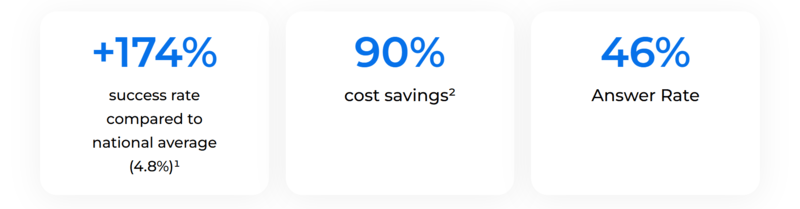
Faced with the dual threat of Hurricanes Helene and Milton, BCU needed to reach affected members fast, even as some local branches were closed due to storm damage. So the Credit Union partnered with AviaryAI to deploy AI-powered voice agents that could launch quickly and handle high volume without overwhelming staff with a flood of inquiries.
In just 4 days, BCU rolled out an outreach campaign that delivered personalized relief information based on each member’s situation. The voice agents shared options such as fee reimbursements, emergency loans, and insurance claim assistance. For members in the most impacted areas, they also provided details on temporary branch locations and available services. Because the calls were two-way, members could ask questions and get answers immediately. BCU also implemented follow-up calls to improve message delivery.
In under 10 days, the agents placed 55,324 calls to 33,117 members. BCU reports 46% answered, and 52% of answered calls were successful, while reducing costs by 90% compared to human outbound calling. The campaign also helped BCU identify which members were most impacted, so employees could focus on people with more complex needs. As BCU CEO Mike Valentine put it, the effort showed how AI can deliver “timely, compassionate, and effective support to our members when they need it most.” (link)
3) New CSI 2026 Banking Priorities Report
CSI’s 2026 Banking Priorities Executive Report surveyed 252 leaders and found AI is now the top opportunity and top worry. Half of respondents named AI the leading tech trend, ahead of digital assets (20%) and digital transformation (11%). AI-enhanced social engineering, including voice cloning and deepfakes, jumped to the top cybersecurity concern. 85% say institutions adopting AI will gain a meaningful competitive edge.
Credit Union leaders should note two gaps between banks and CUs. Banks were almost twice as likely to cite back-office efficiency as an AI win (38% vs. 21%). And fewer Credit Unions feel well-prepared for a cyberattack (72% vs. 85% for banks).
Leaders also expect branches to stay relevant, with 91% saying they matter over the next decade. That puts pressure to modernize without losing the relationship feel. (link)

Tips & Use Cases
Learn to apply AI…
6 reasonable AI predictions for 2026 from CU 2.0: AI will be embedded by default, adopted quietly by staff, expose data quality gaps, reset member speed expectations, face cultural resistance, and reward Credit Unions that deploy agentic automation early. (link)
Data-driven marketing is now table stakes for Credit Unions: If you treat targeting, messaging, and channels as separate projects, you’ll waste spend and struggle to repeat wins. Pair predictive behavior models with coordinated digital and direct mail campaigns to lift response rates ~20% on average. (link)
Stablecoins + consumer AI agents could reshape member relationships: As stablecoins bypass cards and AI consumer agents shop on behalf of members, your website and app may disappear from the decision flow. Credit Unions must compete on trust, direct value, and agent-readable products or risk losing influence, deposits, and interchange. (link)
How to move Credit Union AI adoption faster through collaborations: If you try to solve AI, deepfake detection, business banking onboarding, and stablecoins alone, you move at legacy speed. Use shared sandboxes and early-access partnerships, like MDC’s model, to test fast, share lessons, and deploy with peer Credit Unions. (link)
Credit Unions need to shape AI ethics and alternative ID rules now: The World Council of Credit Unions is pushing proactive AI ethics and alternative ID frameworks so you influence regulators instead of inheriting bank-first rules. If you stay passive, you risk higher compliance burden, weaker member protections, and fewer options to expand access. (link)
Modern infrastructure matters more than “cool” AI features: Jody Bhagat from Engine by Starling says most banks spend 70-80% of tech budgets maintaining legacy cores, leaving little room for differentiation or AI at scale. Real-time, API-driven architecture enables 40% faster call handling, 50% fewer handoffs, and rapid launches of fraud and elder-protection tools. (link)
Blue Eagle Credit Union adopts Scienaptic AI to modernize lending: Blue Eagle CU plans to use AI credit decisioning to deliver faster, more inclusive loan decisions, helping say yes more often without increasing risk. (link)
Lawsuit against Eightfold AI exposes risks of non-transparent AI hiring tools: The complaint alleges qualified candidates were auto-rejected without disclosure, data visibility, or appeal rights. Credit Unions using AI in hiring should audit vendors for transparency, bias controls, and compliance before regulators do. (link)
AI credit scoring is replacing rigid models as regulators push for transparency: FIs are moving beyond static scorecards amid rising volatility and supervision, using explainable AI models and governed alternative data to assess risk more fairly. The real challenge is execution, integrating scores into underwriting with clear oversight and audit trails. (link)
53% of risk teams are already adopting AI in credit risk management: Use AI in KYC and document review to cut processing time 60% and manual review effort 70%, and automate 50% of contract generation. Plan for data quality and explainability gaps, challenges cited by 45% and 39% of teams, and build audit trails before your Credit Union scales monitoring. (link)
4 ways Credit Unions can use agentic AI to prevent fraud: Use it to 1) catch synthetic IDs during onboarding, 2) flag mismatched income and employment in loan origination, and 3) monitor transactions for first-party fraud that rules miss. Plus, 4) speed dispute and chargeback triage, since 66% of consumers would switch banks over slow dispute resolution. (link)
AI-powered financial nudges are reshaping how people save, spend, and manage money: By using behavioral data and predictive analytics, AI can deliver timely prompts that help members save more, spend smarter, and reduce debt. These nudges offer a scalable way to boost financial wellness and engagement without adding operational lift. (link)
Sonata Bank bets on practical AI to streamline core operations: Sonata Bank is focusing AI on clear operational wins like fraud detection, KYC indexing, and underwriting support instead of broad experimentation. (link)
3 AI use cases fixing accounting, AR, and AP where finance actually breaks: Use AI to apply judgment before posting in accounting, route AR decisions based on customer behavior to unlock cash faster, and stop AP errors by isolating invoice mismatches before they hit the ledger. (link)
Intelligent Lending Group cuts marketing compliance review time with AI: By using AI-driven review tools from Adclear, Intelligent Lending Group is automating financial promotions checks across its TotallyMoney and CredAbility apps, and Ocean. (link)
Older members are adopting AI when it removes friction: Voice-first, conversational AI is seeing strong adoption among adults 50+ because it feels intuitive, predictable, and service-oriented, challenging assumptions about who AI is really for. (link)
AI amplifies broken member experience when research is weak: Research shows 91% of business customers want streamlined digital insurance journeys, but only 34% feel they get them. If your Credit Union skips deep, authenticated research, AI will scale noise and friction instead of improving lending, claims, and protection experiences. (link).
$723B in cloud spending signals the shift to AI-native banking architectures: With 1.75B digital banking accounts processing $1.4T annually and 76% of U.S. consumers using mobile apps, speed and intelligence now define competitiveness. Nearly half of digital users will switch for a better experience, making AI-native cores essential as branches close and loyalty shifts to real-time performance. (link)
AI agents and stablecoins threaten card payments’ dominance: Autonomous AI agents are starting to execute payments at machine speed, and analysts estimate up to 20% of card settlement volume could shift by 2026. Push-based, programmable stablecoin payments offer instant finality and near-zero fees that card rails cannot match in an agentic-driven economy. (link)
Fintech Takes’ Alex Johnson lists 10 banking priorities for 2026: Stop chasing predictions and resolutions and set 2026 priorities, like investing early in AI governance while LLMs stay out of high-risk credit decisions. Keep open banking moving despite U.S. 1033 limbo, make stablecoin money legible, add self-exclusion tools, and design shared-access banking for aging households. (link)

Funding Spotlight
Where the money is flowing for innovation…
PayPal buys Cymbio to lock up agentic commerce infrastructure: PayPal’s acquisition of Cymbio brings AI-driven product discovery, catalog management, and agent-ready commerce rails in-house as agentic shopping accelerates. (link)
Zocks raises $45M Series B to scale agentic AI for financial advisers: Zocks is expanding its agentic assistant used by 5,000+ firms to automate onboarding, meeting prep, and document workflows, saving advisers 10+ hours per week while adding enterprise-grade security and compliance. (link)
skrooge.ai raises $1.85M seed round to blend AI with managed accounting services: skrooge.ai is expanding AI-enabled accounting and tax support for SMBs, combining automation with human accountants to streamline compliance, reporting, and plain-English financial insights. (link)
Mine pulls in $14M Series A to launch an AI money agent for young adults: Mine is rolling out MoneyGPT, an AI-powered finance agent that adapts to gig income, credit use, and competing goals to deliver hyper-personalized guidance and build financial confidence early. (link)
Jelou raises $10M Series A to bring agentic financial transactions into WhatsApp: Jelou is scaling Brain, its platform for deploying AI agents that execute payments, onboarding, ID checks, and credit workflows directly inside WhatsApp conversations. (link)
AiStrike raises $7M seed round to push preemptive, agentic AI cyber defence: AiStrike is scaling an AI-native security platform that uses autonomous agents to detect, prioritize, and respond to threats in real time without relying on SIEM-heavy architectures. (link)
Armilla AI raises $25M to insure the growing risks of generative and agentic AI: The funding expands AI-specific liability coverage for model errors, harmful outputs, regulatory violations, and agent failures as AI regulation tightens globally. (link)
Datarails raises $70M Series C to expand its AI-native FinanceOS for CFO teams: Datarails is scaling an Excel-first FinanceOS that unifies FP&A, close, cash, and spend management while using AI to cut manual data stitching and improve real-time financial visibility. (link)

Keeping up with Tech
The latest in fintech and tools…
Shopify adds a 4% OpenAI fee to sales completed through ChatGPT checkout: The fee on sales completed through ChatGPT checkout creates a new layer of transaction economics as “agentic storefronts” move purchases directly into AI conversations. (link)
Concourse launches finance AI agent platform alongside $12M Series A: The enterprise-grade agent platform connects directly to ERPs, QuickBooks, Stripe, Ramp, and data warehouses to automate analysis and reporting with explainable, multi-step workflows. (link)
Mortgage Magic embeds AI-assisted mortgage sourcing directly into broker CRMs: The AI-assisted sourcing workflow filters products transparently from fact-find data while preserving adviser control and FCA-ready audit trails inside the CRM. (link)
PlannerPal launches AI pre-meeting prep tool for financial advisers: The workflow pulls data from CRMs, documents, valuations, emails, and prior notes to standardize client readiness before meetings. It cuts prep time while improving agenda clarity and compliance confidence. (link)
Mastercard launches Agent Suite to bring agentic AI into payments and commerce: Mastercard is combining AI agents with payments, fraud, identity, and advisory services to automate decisioning, offers, and campaigns for financial institutions. Merchants can also use agents for pricing, inventory, and personalized engagement at scale. (link)
Intellect Design Arena accelerates U.S. expansion with AI-first real-time payments platform: The AI-first platform applies intelligence across pre, in-flight, and post-payment stages for RTP, FedNow, ACH, Fedwire, and SWIFT. The composable, low-code architecture enables real-time validation, anomaly detection, and orchestration without ripping out existing cores. (link)
Nets partners with Triple to add AI-driven transaction clarity for European banks: Nets is integrating Triple’s AI-powered merchant enrichment to turn raw card transactions into clear names, logos, and locations. The move targets rising friendly fraud, cutting support calls and chargebacks while meeting new Mastercard and Visa data mandates. (link)
Mastercard expands Start Path to recruit agentic AI startups: Mastercard is adding agentic AI firms to its Start Path program to source emerging partners beyond big tech as it builds agentic commerce capabilities. The program has supported 500+ startups and now serves as a pipeline for global agentic AI talent. (link)
PayPal partners with Microsoft to revive branded checkout inside Copilot: PayPal will power Copilot Checkout so shoppers can discover products, select options, and complete payments without leaving Microsoft’s AI interface. (link)

In Other News
Related news you can learn from…
BIS warns AI and digital finance could amplify financial stability risks (link)
House passes bipartisan bills to expand AI adoption support for small businesses (link)
UK regulator launches forward-looking review on advanced AI in financial services (link)
Why traditional risk models are no longer enough for modern wealth management (link)

Community Corner
Memes and visuals…

Thanks for reading!
Until next week,
— Credit Union AI Guy
Enjoying this newsletter? Forward it to a colleague who might appreciate practical AI insights.
Have a question or want to share your own AI experiment? Reply to this email or connect with us on LinkedIn. We’re building a community of curious Credit Union professionals. Come join the conversation!