


It’s about to be GAC week, and thousands of Credit Union leaders are heading to DC to shape the future of the movement.
Meanwhile, back home, this week’s featured CUs are implementing AI that staff and members can trust.
This week, I cover:
How Suncoast CU doubled automated loan decisions
InTouch CU serves more members with 40% fewer staff
SunWest FCU rebounds from an AI flop
Read time: 9 minutes

Top Stories
The biggest news this week…
1) Suncoast CU doubled automated loan decisions
Loan analysts buried in routine applications can’t focus on the members who need them most.
At Suncoast Credit Union, the nation’s largest CDFI with 1.3M members and $19.2B in assets, that bottleneck was real. Before Zest AI, staff were manually deciding on the majority of incoming loan applications. Only 30% of decisions were automated, leaving analysts stretched across 78 branches.
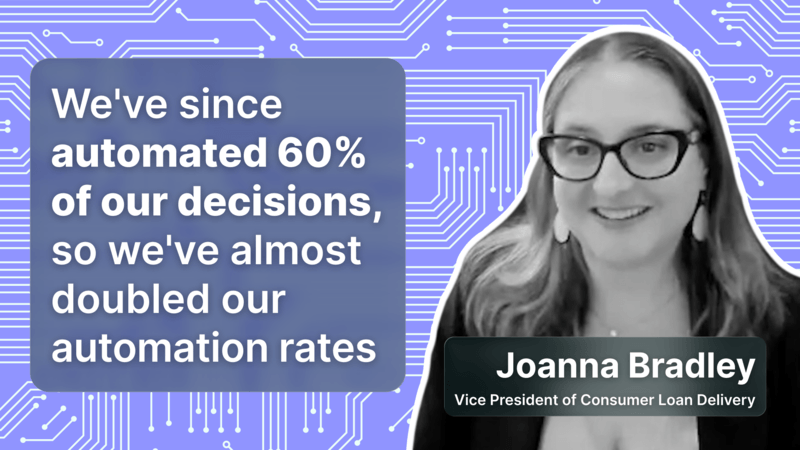
Five years ago, Suncoast engaged Zest AI to fix that. The results were significant. Automated decisions jumped from 30% to 60%, nearly doubling the share of applications decided without staff intervention. That shift unlocked 27,000 hours of staff time annually. It also made centralized underwriting possible across all 78 branches, creating consistency and freeing loan analysts for complex decisions that actually require human judgment.
The member impact was just as clear. Suncoast now consistently holds a 90% Net Promoter Score on consumer lending, one of the highest scores across the entire Credit Union. Joanna Bradley, Vice President of Consumer Loan Delivery, described a member who came in after a total vehicle loss, anxious about approval. With Zest AI in place, the member advocate delivered an instant yes and focused entirely on the member. “The member told us they felt like we were their partner,” Bradley said.
Suncoast is now expanding Zest AI into fraud detection and, through a new integration with Clutch, pre-qualifying members for loans before they even apply, so they can apply with confidence. (link)
2) InTouch CU serves more members with 40% fewer staff

What if you could serve more members than ever while cutting your headcount nearly in half?
Kent Lugrand, President and CEO of InTouch Credit Union, says that’s what leveraging new tech and AI allowed them to do. Five years ago, InTouch had 240 employees across 11 branches. Today it runs on 140, while serving more of its 70,000 members than before.
Lugrand calls himself an AI “tweener.” He knew opening the door too wide too fast was risky, describing AI internally as a Pandora’s box he didn’t want to crack without a plan. So InTouch moved deliberately. On the front office side, chatbots now handle routine member questions. In the back office, a partnership with Zest AI pushes lending decisions beyond the traditional four to six data points, forecasting member financial challenges and opportunities before they surface. Tasks that once consumed hours now clear in seconds, freeing staff for the relationship work no algorithm can replicate.
When employees raised concerns, Lugrand’s answer was never no. Instead, leadership brought staff into the AI conversation early, letting them shape how tools get used and where their human judgment still matters most. (link)
3) SunWest FCU rebounds from an AI flop

Imagine this: Your AI agent just went live… and members are absolutely repulsed.
That’s pretty much what happened to SunWest Federal Credit Union when it launched its AI assistant Sonny. Members pushed back hard because they wanted a real person, not a bot. Losing that trust with a relationship-first membership was a real risk.
Instead of defending the rollout, VP and Chief Experience Officer Katie DeFeo pulled Sonny offline. The team collected direct feedback from unhappy members, asking them to detail every complaint. SunWest then sent emails and texts telling members Sonny was “going back to training” because she didn’t meet their needs.
In a smart move, they brought those same unhappy members back to test the rebuilt Sonny before re-launching. When Sonny relaunched, SunWest framed it as: “We used your voice to make her better.” Now, if a member calls in and says Sonny made a mistake, they can trust SunWest is dedicated to listening and making things right. (link)

Tips & Use Cases
Learn to apply AI…
BCU’s Chief Digital Officer built an AI skilling program: Baxter Credit Union launched a cross-functional AI committee 18 months ago, with a tiered skilling program that advances employees from AI Cadet to AI Wizard. The CU has since deployed AI for internal summarization, presentations, and employee efficiency, and has built some member-facing tools, with more to come. (link)
Seattle Credit Union pilots AI underwriting and staff knowledge tool: The Credit Union is testing a Copilot-style tool that puts internal policies at staff fingertips and exploring AI underwriting to expand loan access. CFO Michael Cruz advises staff skeptical of AI to treat it like a calculator: something that augments your work, not replaces it. (link)
Sundeep Kapur deploys AI across four Credit Unions at once: The technology educator is running AI chatbots, call monitoring, and lending tools across four Credit Unions. His goal: cut the 25-minute account opening process down so staff spend less time on data entry and more time building member relationships. (link)
Arizona Financial tests generative AI for staff operations manual: SVP of R&D Eric Givens is piloting a ChatGPT-style tool that lets call center staff ask plain-language questions to pull up policy and procedure answers instantly. Givens says the first use case for generative AI at most Credit Unions is internal knowledge access, and cautions staff not to trust AI answers 100% or input sensitive data. (link)
PrimeWay FCU cautiously locks down AI access behind approval: To prevent member data leaks, CIO Bob Morgan requires employees to get senior leader sponsorship and his personal sign-off before accessing any AI tools, with the firewall blocking unauthorized use entirely. The FCU is rolling out an Eltropy AI contact center solution and meets monthly as an AI committee to plan next steps. (link)
CUNA Strategic Services urges Credit Unions to start AI with a use case: President Barb Lowman says the biggest mistake Credit Unions make is jumping into AI out of FOMO without a clear problem to solve first. She sees back-office automation and after-hours member self-service as the strongest starting points to free staff for higher-value engagement. (link)
Behavioral agent automation platforms offer Credit Unions a third AI path: Rather than buying off-the-shelf tools or building custom agents, a new model called behavioral agent automation platforms (BAAPs) observes how employees actually work and builds automations around those patterns. Liminal CEO Steven Walchek says early deployments show 15 to 20 hours of time savings per week per employee. (link)
Bland deploys voice AI for financial institutions in under 30 days: The platform handles fully phone, SMS, and chat interactions for banks and Credit Unions, learning each caller’s conversational rhythm to adjust response timing automatically. CEO Isaiah Granite says 1 in 4 Americans has already talked to Bland’s AI, and institutions report longer calls, faster resolutions, and higher member retention. (link)
5 cybersecurity threats Credit Unions must prepare for in 2026: The biggest risks include employees pasting member data into public AI tools, vendor security gaps, unsecured API connections, ransomware with dual extortion, and “harvest now, decrypt later” attacks where criminals steal encrypted data today to crack it with future quantum computers. (link)
Agentic AI purchases are creating a new category of disputes: When AI agents execute purchases autonomously, traditional proof points like authentication checks and delivery confirmation no longer establish intent. Credit Unions should prepare now by tracking what members authorize their agents to do and building evidence trails before dispute volumes climb. (link)
Deutsche Bank’s AI predicts finance jobs face heavy disruption: The bank’s proprietary AI tool dbLumina analyzed its own impact and flagged wealth management, algorithmic trading, fraud detection, and customer service as the most vulnerable finance roles. The global robo-advisory market is projected to grow from $7.39 billion in 2023 to $72 billion by 2032. (link)
Feedzai finds over 50% of fraud now involves AI: With 92% of financial institutions already reporting criminal use of generative AI, a new “Know Your Agent” framework shifts fraud prevention from blocking automation to monitoring how authorized agents behave over time. Credit Unions whose fraud controls assume human initiation will develop blind spots as AI agents gain authority to move member funds. (link)
Harris Poll finds members want AI to inform, not decide: A survey of 2,079 U.S. adults found 68% are open to AI in banking, but comfort varies by use case: answering basic questions (37%), fraud alerts (36%), and explaining transactions (30%) score highest, while suggesting next steps (25%) and submitting payments on their behalf (19%) score lowest. (link)
BofA’s AI struggles show banks underestimate the structure required: Leaked emails reveal Bank of America employees say they were handed a Formula 1 race car but given local car mechanics to operate it. Research shows underwriters need to process roughly 20 loans before developing genuine AI proficiency. (link)
70% of bank CEOs now personally lead AI strategy: A BCG survey found bank CEOs spend nearly seven hours a week expanding their AI knowledge, with 54% saying their job stability depends on getting AI right. (link)
AI-driven underwriting tops Credit Union mortgage tech priorities for 2026: A National Mortgage News survey of 150 mortgage professionals found 57% expect AI-driven underwriting to change how the industry works this year, with real-time income verification (51%) and fraud detection (49%) close behind. (link)
TD Bank targets $1B in annual AI value: SVP Ted Paris says every customer-facing AI interaction keeps a human staff member in the loop, while purpose-built guardrails prevent queries outside a model’s intended scope. (link)
U.S. Treasury releases AI governance framework adapted for financial institutions: The first two resources include an AI lexicon and a customized risk management framework with a maturity questionnaire and risk-to-controls mapping matrix. Four more are coming, with small and mid-sized institutions explicitly named as the target audience. (link)
First Abu Dhabi Bank deploys 30+ agentic AI use cases enterprise-wide: The bank has embedded AI agents across trade, payments, compliance, and client operations, with 90% of structured data now integrated into an agentic AI layer. FAB’s model centers on staff upskilling and governance infrastructure before scaling, not the other way around. (link)
Vivox AI deploys KYB compliance agents that self-improve in two weeks: TransferMate rolled out Vivox AI’s Know Your Business agents globally, with the system’s quality approval rate jumping from 60% to 80% in the first two weeks through human-in-the-loop learning. The platform analyzes up to 100 corporate documents per case and screens across 100+ countries. (link)
b1BANK deploys Covecta’s agentic AI across loan and deposit operations: The platform embeds domain-specific agents directly into existing workflows, delivering policy-aligned assessments with full audit trails in eight weeks and no system migration. UK clients report 50% productivity gains. (link)
J.D. Power finds consumers turning to AI for financial advice: A survey of 4,000 consumers found 51% now use AI tools like ChatGPT and Gemini for financial guidance, yet only 30% trust AI-generated advice. (link)
OpenClaw autonomy raises new cybersecurity risks for financial institutions: Security researchers found 12% of OpenClaw’s third-party “skills” were malicious and warned its agentic autonomy can execute hidden prompt injections or data exfiltration without clear human intent. Unsanctioned AI agents with employee-level access create shadow IT risks that traditional endpoint and network controls struggle to detect. (link)
5 post-deployment processes Credit Unions need to keep AI from drifting: A living model inventory, documented decision rights, periodic red-team testing, an expanded incident response plan, and a value scoreboard with both ROI and risk metrics are the minimum for defensible governance. (link)
Ascend FCU outlines adaptive fraud strategy for digital banking: CIO Rik Reitmaier emphasizes embedding real-time monitoring, alerts, and verification tools directly into mobile banking while pairing member education with cross-team coordination. The approach focuses on stopping emerging AI-driven scams quickly without adding friction to legitimate transactions. (link)

Funding Spotlight
Where the money is flowing for innovation…
Nvidia finalizes $30B investment in OpenAI as part of a $100B+ funding round: The deal replaces an earlier chip supply commitment and signals OpenAI is scaling infrastructure at a level that requires chipmaker-scale capital. (link)
Jump raises $80M Series B to expand its AI operating system for financial advisors: The platform already serves 27,000 advisors, adding 2,000 per month, and automates meeting prep, note-taking, and CRM updates. (link)
Sherpas raises $3.2M seed round to automate financial planning workflows: Led by the family office of Mariner Wealth Advisors founder Marty Bicknell, the platform generates structured, explainable advisory outputs in minutes instead of days after live enterprise testing under compliance supervision. (link)
Stacks raises $23M Series A to automate reconciliations, journal entries, and month-end close for finance teams: The platform claims 100,000+ hours saved annually across 30 enterprise customers using a dedicated financial data layer before deploying AI agents. (link)
Avantos raises $25M Series A to unify client onboarding and servicing across wealth, insurance, retirement, and banking: Its knowledge graph gives AI agents and human teams a shared source of truth across fragmented legacy systems. (link)
Cogent Security raises $42M Series A for AI vulnerability response: The round will help deploy autonomous agents that investigate CVEs, identify system owners, generate remediation steps, and track fixes end-to-end. Clients report cutting vulnerability exposure windows by 97% through traceable agent actions and approval gates. (link)
Zenyard raises pre-seed funding to build a purpose-built AI agent for software reverse engineering: The platform integrates directly into existing decompilers, analyzes entire binaries, and delivers explainable outputs — addressing one of cybersecurity’s most manual workflows already deployed across leading threat intelligence teams. (link)
Basis raises $100M Series B for AI accounting agents: Accel led the round at a $1.15B valuation to help Basis deploy long-horizon agents across tax, audit, and client services, and now supports roughly 30% of the top 25 accounting firms. (link)

Keeping up with Tech
The latest in fintech and tools…
Filene + Vertice AI + Vizo Financial launch CUltivate AI model: The Credit Union-specific model is trained on industry data and overseen by an advisory committee to support regulatory guidance and branch knowledge management. The CUSO deploys within hours without integration work, enabling faster AI adoption across Credit Unions. (link)
Interface.ai launches Smart Collections for Credit Unions: The agentic AI tool automates early-stage delinquency outreach with coordinated messaging and compliance-by-design controls. It helps community financial institutions engage 30-59 day past-due accounts sooner, reducing recovery costs while maintaining member trust. (link)
Anthropic acquires Vercept to improve Claude’s computer use: The deal folds Vercept’s computer vision and interaction technology into Claude, boosting its OSWorld benchmark score from under 15% in 2024 to 72.5% today. Stronger software navigation capabilities could help financial teams automate spreadsheet tasks, form entry, and multi-step workflows inside existing applications. (link)
Vouched launches Agent Checkpoint to govern AI logins: Between 0.5% and 16% of website traffic across Vouched’s customers now comes from AI agents using human credentials. The Know Your Agent suite applies OAuth authentication, delegated permissions, legal authorization controls, and audit trails to help financial institutions detect and manage agent-driven access. (link)
Basware launches governed AI agents for invoice processing: An AP Business Agent provides real-time invoice guidance while an AP Data Agent answers natural language queries, with all actions controlled through a central policy engine. Upcoming agents will automatically contact suppliers to resolve disputes, offering a governed entry point into measurable AP automation. (link)
Rakuten Card launches AI transaction query agent: Available on Android and iOS, the agent lets cardholders query statement data in natural language to summarize monthly spending, filter transactions by date, and estimate category totals. (link)
Synechron + Cognition embed Devin for AI engineering: The partnership integrates Devin, an autonomous AI software engineer, into Synechron’s delivery model to accelerate system upgrades and migration projects for financial institutions. Early testing showed faster modernization, improved testing quality, and productivity gains within existing security and governance frameworks. (link)
Google launches Gemini 3.1 Pro with stronger reasoning: The model is rolling out across Gemini API, Vertex AI, Gemini Enterprise, NotebookLM, and the Gemini app, with Google reporting a 77.1% verified ARC-AGI-2 score. It supports data synthesis, complex problem-solving, and developer workflows, such as generating animated SVGs from text for enterprise use. (link)
Anthropic launches Claude Code Security for vulnerability detection: Built on Claude Opus 4.6, the system reasons through data flows and business logic to identify flaws that static analysis tools miss. It applies multi-stage self-verification, routes patches through human approval, and has surfaced 500+ previously undetected vulnerabilities in open-source production code. (link)
Mastercard builds Agent Suite for AI commerce: Launching in Q2 2026, the suite combines customizable AI agents with Mastercard’s payments infrastructure to power conversational shopping and product recommendations. It includes Agent Pay for AI-initiated transactions and partnerships with PayPal, OpenAI, Google, and Cloudflare to establish safety and transaction standards. (link)

In Other News
Related news you can learn from…
Microsoft says no single tool can stop deepfakes (link)
JPMorgan is spending $20 billion on tech in 2026 (link)
Anthropic says Chinese labs ran 16M+ fake Claude exchanges to clone its AI (link)
Fed Gov. Michael Barr says AI is reshaping workforces now, with bigger disruption still ahead (link)

Community Corner
Memes and visuals…

Thanks for reading!
Until next week,
— Credit Union AI Guy
Enjoying this newsletter? Forward it to a colleague who might appreciate practical AI insights.
Have a question or want to share your own AI experiment? Reply to this email or connect with us on LinkedIn. We’re building a community of curious Credit Union professionals. Come join the conversation!