


AI shiny object syndrome is real. So where do you start?
Hint: It’s not where your members can see.
Today, I cover:
Kitsap turns agentic AI into ROI by starting with the “boring” first
Where AI is delivering & failing for Credit Unions
Great Lakes CU is making small-dollar lending work
Read time: 8 minutes

Top Stories
The biggest news this week…
1) Kitsap turns agentic AI into ROI by starting with the “boring” first
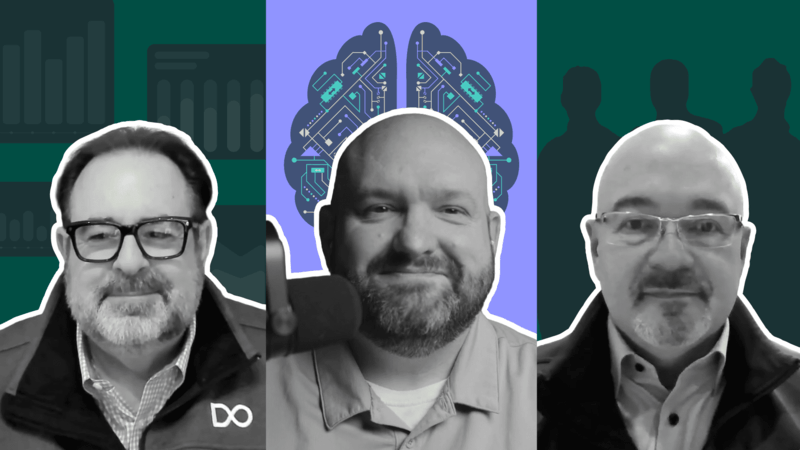
Kitsap Credit Union didn’t kick off its agentic AI push with anything member-facing. CEO Shawn Gilfedder said it started with a three-year idea and an “unsexy” use case: improving internal audit processes. After a breakfast meeting with Troy Wyatt, CEO of D8TAOPS, Kitsap deliberately chose to look inward first and deploy agentic tech within employee workflows, especially in compliance and audit, before letting anything touch members.
D8TAOPS’ approach is to start at the data layer (cleaning, governing, and securing data), then break work into small business processes that become repeatable agents, eventually rolling up into something like a “Kitsap GPT.” So, Kitsap had to set the foundational infrastructure by cleaning and organizing data, setting up reliable ingestion pipelines, and standing up a private language model in their Azure environment. Once that groundwork was in place, the data could be standardized and made accessible across the organization, enabling it to be reused safely and consistently in new AI-driven workflows.
They addressed the “what about my core?” problem by treating the core as one data source among many, important for inputs/outputs, but not the experience layer. Meanwhile, they used platforms like Salesforce and others to deliver service and personalization.
Gilfedder framed the payoff as “return on innovation,” where improvement becomes an “X factor” driven by data and bandwidth. When they automate the “digital janitorial” work, employees can spend more time building relationships. For example, their contact center’s average talk time is already over six minutes because bots and automation removed routine work. But the goal is to turn that into a deeper 15-minute discussion about financial wellness by letting agents “pick up the other work along the way.” (link)
2) Where AI is delivering & failing for Credit Unions
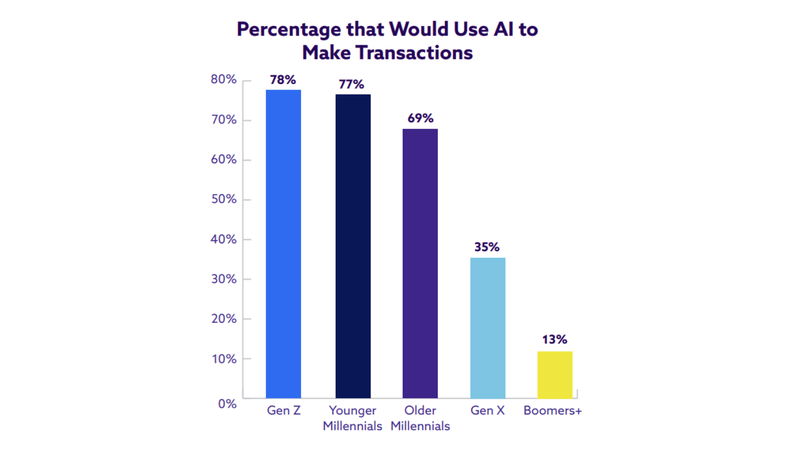
AI demand is no longer theoretical for Credit Unions. A new report from PYMNTS Intelligence and Velera finds:
30% of consumers use AI tools multiple times per week
55% already rely on AI for financial planning or budgeting
42% say they’d feel comfortable using AI to complete financial transactions
That comfort is sharply generational: 80% of Gen Z and younger millennials use AI for financial planning, and their comfort with agentic AI is similarly high (78% for Gen Z and 77% for younger millennials), versus 13% among baby boomers and older consumers.
Where AI is delivering today is in high-trust, high-impact use cases. The report highlights personalization, member service, and fraud prevention as areas where AI is producing tangible value. Chatbots and virtual assistants are the leading application, with 58% adoption cited by CULytics. Fraud management is also emerging as a standout use case: Cornerstone Advisors lists it as the second-most common generative AI application at 48% (behind contact centers at 74%), and Alloy reports a 92% net increase in AI fraud-prevention investment among CUs in 2025.
Where AI struggles is scale. A CULytics survey cited in the report found 42% of CUs have implemented AI in specific areas. But only 8% say AI is used across multiple facets of the organization, largely due to gaps in data readiness, governance, and integration. (link)
3) Great Lakes CU is making small-dollar lending work
Small-dollar lending gets expensive fast at scale because servicing volume can overwhelm margin. Great Lakes Credit Union (a $1.4B CU with 100,000+ members, 51%+ being low-income) is leaning on automation to reduce cost-to-serve, while keeping humans in the loop where financial coaching improves outcomes.
The clearest proof is the contact center. CEO Steve Bugg said their AI assistant, Olive, now answers all inbound calls and fully handles 60% end-to-end with no human interaction. On lending, Bugg described a fully automated, app-based, unsecured process driven by member behavior data. With a “couple clicks… you’re approved… funded… we don’t touch it,” and he said losses have been minimal. The direction from here is a blended model. Automate the loan workflow and digitize the repeatable parts of financial literacy, while keeping staff available for members who want deeper guidance. (link)

Tips & Use Cases
Learn to apply AI…
5 ways Credit Unions are using tech to drive growth in 2026: Growth leaders are personalizing incentives with transaction data, using agentic AI to automate onboarding and loan decisions, and embedding smart guidance into digital channels. They’re also improving mobile and web account opening and using tech to differentiate products, bundles, and onboarding journeys. (link)
How to pair AI with branches to build trust in an AI-driven world: Use AI for real-time decisioning and personalization while positioning branches as places for control, consultation, and problem resolution when digital options feel overwhelming. Research from Accenture shows physical presence reinforces safety and brand visibility as AI search and choice overload increase. (link)
How to evaluate agentic AI for financial crime compliance: Treat agents like L1 investigators that clear low-risk AML and KYC alerts and escalate exceptions. Validate them on your Credit Union’s historical cases for repeatable decisions, clear data provenance, and examiner-ready documentation with a named compliance owner and confidence thresholds. (link)
How to use Claude Cowork as a finance data quality gatekeeper: Give Claude Cowork access to your board deck, P&L, and budget files so it can cross-check numbers and narratives inside the same workspace. It flags inconsistencies like mismatched EBITDA, unsupported growth claims, or deteriorating cash conversion. (link)
How AI agents move past the automation ceiling in lending operations: Use AI agents to handle complex borrower cases that rule-based automation can’t, like uneven income, alternative data, or policy exceptions. Let agents flag risk, explain decisions, and escalate edge cases so your team scales volume without sacrificing credit quality or compliance. (link)
Agentic workflows reshape commercial lending fraud detection: Fraud slips through when intake, underwriting, and funding decisions live in disconnected tools, and human judgment varies by analyst. Agentic systems enforce a single fraud playbook across the loan lifecycle with explainable decisions, confidence scoring, and built-in escalation. (link)
How to achieve AI ROI by starting with internal workflows: Focus first on low-risk internal use cases like document intelligence, case summarization, and coding assistance, where AI can deliver fast productivity gains without regulatory friction. Measure success against clear KPIs, modernize data access, and upskill teams continuously so AI tools are actually used. (link)
Crypto scams drove losses of up to $17 billion in 2025: Chainalysis estimates AI-enabled impersonation scams grew 1,400% year over year. Average scam payments more than tripled as criminals used AI, SMS phishing, and laundering networks to scale faster. (link)
Kentucky AG lawsuit puts AI data practices under the microscope: Kentucky’s attorney general sued Character.AI for alleged violations of the state’s new data privacy law, citing mishandling of sensitive conversational data, including from minors. The case raises new consent and vendor risk questions about AI systems that retain user conversations. (link)
Credit Union leaders flag stablecoins and AI as near-term governance tests: Speaking to Credit Union boards, leaders from the Hawaii Credit Union League and NASCUS cited the GENIUS Act, warned the U.S. lags global stablecoin adoption, and noted Tether already exceeds $180B in value. They also cautioned AI due diligence now extends to exams. (link)
Accenture’s Mike Abbott on how AI creates new revenue in banking: Generative and agentic AI are shifting strategy from cost-cutting to growth by enabling one-to-one marketing, guiding relationship managers, and embedding intelligence directly into products like payments and cash management. (link)
AI-first banking removes channels but raises the bar on trust: A Brazilian bank runs entirely through a WhatsApp chatbot, eliminating branches and apps, but it faces increased identity and takeover risk. Banks must pair agentic AI with continuous verification, behavioral biometrics, and self-healing fraud responses to prevent account takeovers in 24/7 agent-led banking. (link)
AI must earn funding with owners, outcomes, and a kill switch: Cornerstone Advisors says boards now want measurable productivity or growth results, not “AI for AI’s sake,” with a clear initiative owner and quantifiable outcomes. If value does not show up, leadership needs a kill switch and the middle management muscle to operationalize AI. (link)
U.S. Bank brings gen AI into its developer portal to reduce embedded banking friction: The new AI assistant helps partners navigate APIs, integration patterns, security requirements, and error resolution directly inside a gated developer environment. The tool shortens onboarding and troubleshooting cycles, cutting embedded banking integration timelines by weeks. (link)
AI fakery is pushing banks toward blockchain as a new trust layer: Michael Toner of Profor argues AI and the blockchain are converging as GenAI makes fake bank messages, videos, and identities harder to detect. He says blockchain can act as a verifiable “truth layer,” letting banks prove which communications, payments, and lending terms are authentic as regulation around digital assets firms up. (link)

Funding Spotlight
Where the money is flowing for innovation…
Monnai lands $12M to expand real-time identity and risk infrastructure: Monnai is building sub-second decisioning used across onboarding, fraud, and credit, with global deployments designed to support real-time risk assessment at scale. (link)
Novee raises $51.5M to bring continuous AI penetration testing to security teams: The startup emerged from stealth with an AI-driven platform that continuously simulates real attacker behavior, helping lean security teams surface exploitable vulnerabilities earlier as AI accelerates both software changes and attack cycles. (link)
GrowthPal secures $2.6M to accelerate AI-led M&A discovery: GrowthPal is scaling a platform that turns growth strategies into acquisition theses and scans millions of companies to surface high-fit, often off-market targets in days, compressing deal sourcing timelines and reducing reliance on banker-led networks. (link)
WitnessAI lands $58M to expand enterprise AI security and governance: WitnessAI helps regulated organizations govern how AI models, applications, and autonomous agents are used, monitored, and constrained, as enterprises move from pilots to large-scale AI deployment. (link)
Aikido Security hits unicorn status with $60M Series B: Aikido Security reached a $1B valuation after a DST Global–led round, backing its push to embed vulnerability detection and automated remediation directly into software development workflows rather than bolting security on after release. (link)
Depthfirst secures $40M to protect AI-accelerated software pipelines: Depthfirst builds autonomous agents that identify, triage, and remediate vulnerabilities across code, cloud, and infrastructure, targeting the new risk created as AI-assisted development compresses release cycles. (link)

Keeping up with Tech
The latest in fintech and tools…
Keye introduces audit-ready AI copilot for investment due diligence: Odin answers plain-English diligence questions while producing deterministic, auditable outputs instead of probabilistic summaries. By executing analysis through code and embedded investor heuristics, the tool aims to eliminate hallucinations and make diligence results repeatable and regulator-ready. (link)
Gemini adds opt-in personal context to enable more personalized AI assistance: Personal Intelligence allows Gemini to reason across connected apps like Gmail, Photos, YouTube, and Search to take real-time action. The feature is opt-in, privacy-first, and designed with controls that prevent private content from being used to train models. (link)
Hawk launches Analytics Studio to govern AI models for fraud and AML: As 91% of banks now encourage AI use, Hawk’s new Analytics Studio tool lets compliance teams build, retrain, and approve models with built-in explainability, documentation, and version control to meet evolving regulatory expectations. (link)
Feedzai teams up with Matrix USA to fast-track modern fraud defenses: Feedzai is partnering with Matrix USA to pair AI-native fraud and AML technology with hands-on deployment and advisory support. The alliance includes a joint Center of Excellence to help banks roll out scalable, regulator-ready controls as criminals increasingly use AI to automate fraud. (link)
Microsoft Marketplace positions itself as a central hub for enterprise AI and agents: Microsoft is pitching its Marketplace as an easier way to move from AI pilots to real deployment, letting teams plug vetted AI apps and agents directly into tools they already use, like Azure and Microsoft 365. The idea is simpler adoption with built-in guardrails, so companies can build or buy AI without adding new governance or cost headaches. (link)
Anthropic publishes a public “constitution” to govern how Claude behaves: The constitution explains why Claude responds the way it does, not just what rules to follow. The document acts as a final authority for training and is also used to generate synthetic conversations and rankings, helping Claude apply consistent judgment in new situations while enforcing hard limits in high-risk cases. (link)
Google’s TranslateGemma brings high-quality AI translation across 55 languages: TranslateGemma makes accurate translation available on everyday devices, from phones to laptops, without requiring expensive cloud systems. By offering smaller, efficient models that still deliver strong results, it lets organizations support more languages, including underserved ones, while reducing cost and delay. (link)
AI is becoming a core security layer around Bitcoin’s ecosystem: As attacks shift from breaking cryptography to exploiting wallets, exchanges, infrastructure, and human behavior, traditional rules-based defenses are falling behind. AI-driven security is emerging to detect anomalous activity, automate response, and protect Bitcoin’s surrounding ecosystem as threats become faster, adaptive, and machine-driven. (link)
Filene launches payments research hub for Credit Unions: Filene Research Institute’s “All Things Payments Center” will help CUs navigate real-time payments, AI-driven fraud, stablecoins, and shifting deposit economics. The initiative will deliver CU specific benchmarking, research, and implementation roadmaps as Amazon, Walmart, and OpenAI push deeper into payments. (link)

In Other News
Related news you can learn from…
OpenAI outlines its upcoming approach to ads (link)
OpenAI expands ChatGPT Go globally with $8/month tier (link)
4 ways AI is reshaping discovery, health, work, and responsibility (link)
State Street lifts tech spend 11% ahead of 2026 AI and agent rollout (link)

Community Corner
Memes and visuals…


Thanks for reading!
Until next week,
— Credit Union AI Guy
Enjoying this newsletter? Forward it to a colleague who might appreciate practical AI insights.
Have a question or want to share your own AI experiment? Reply to this email or connect with us on LinkedIn. We’re building a community of curious Credit Union professionals. Come join the conversation!