


Growth at all costs is no longer the strategy.
The winners in 2026 will be the Credit Unions that deepen relationships, earn primary financial institution status, and use AI to move at fintech speed without losing trust.
Today, I cover:
Navy Federal scales AI to 35 use cases without layoffs
The 2026 AI game plan from four Credit Union execs
Golden 1’s CMO blends AI speed with authenticity
Read time: 7 minutes

Top Stories
The biggest news this week…
1) Navy Federal scales AI to 35 use cases without layoffs
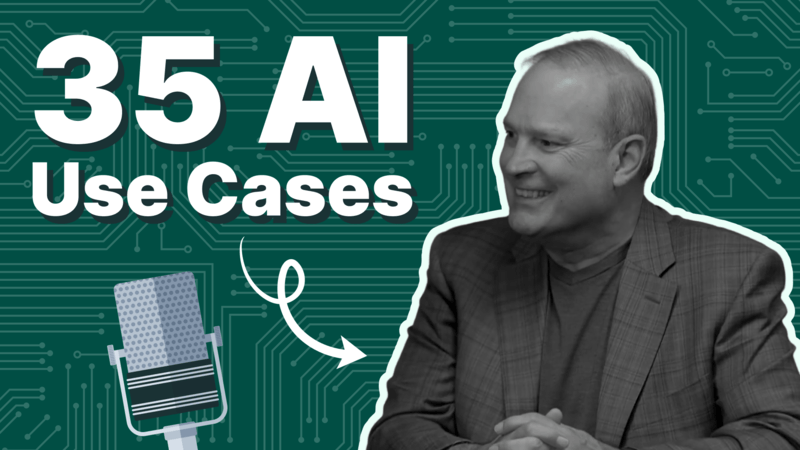
At Money20/20 USA 2025, Navy Federal Credit Union CEO Dietrich Kuhlmann made it clear: they’re “all in” on AI. The 15M-member institution currently has about 35 AI use cases either live or actively underway, and he says they’re already seeing returns.
But Kuhlmann is intentional about the framing. At Navy Federal, they prefer the term “augmented intelligence.” The goal isn’t to replace people. It’s to make employees more effective in serving members. In his view, AI is a workforce amplifier, not a headcount reduction strategy.
That distinction is especially important given Navy Federal’s scale and culture. The organization employs roughly 25,000 staff and, in its 92-year history, has never executed a layoff. Instead, when demand shifts, they retrain and redeploy.
Now, AI and real-time banking represent the next major evolution. Kuhlmann said that between the move to real-time banking and augmented intelligence, “I don’t think a single process or procedure we do today will be done the same way.” For him, the biggest risk is workforce readiness. His advice on adoption is to treat AI as a workforce transformation effort. Align leadership on a clear vision, invest heavily in training, and communicate constantly. In his words, you have to “talk about it a lot” and back it up by showing employees you have their interests at heart.
This AI push didn’t happen overnight. Navy Federal has been investing in data infrastructure and data quality for more than five years. In November 2024, they rolled out a single omni-channel backbone across branch, contact center, online, and mobile, replacing four separate systems with one unified platform. With that foundation in place, their top tech priorities now include transitioning to a new core system to enable real-time banking and moving their entire banking platform to the cloud. (link)
2) The 2026 AI game plan from four Credit Union execs
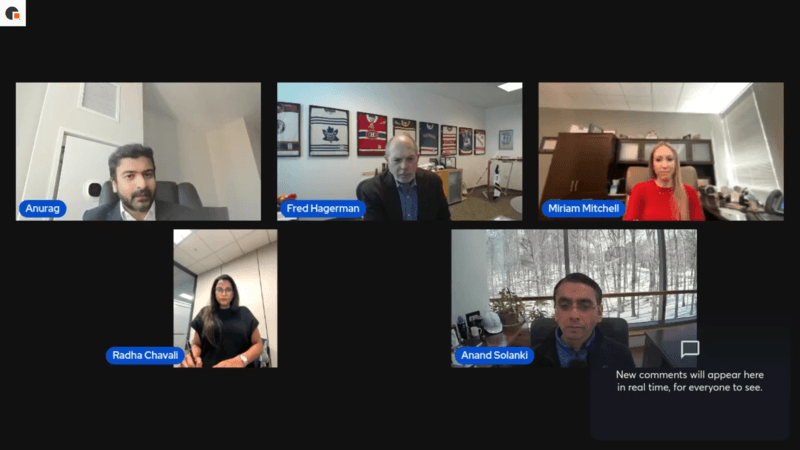
In a special roundtable edition of The Outlier Podcast, four executives from across the Credit Union space compare notes on their 2026 priorities:
At Langley Federal Credit Union, COO Fred Haggerman is personally driving experimentation. He’s testing tools like Gemini and ChatGPT, plus workflow platforms like n8n and Zapier, and encouraging teams to do the same. His view is simple: the people who learn to use these tools best will win, and leaders must reduce fear so teams can find member-focused use cases.
At Addition Financial, CLO Miriam Mitchell is applying AI directly inside lending. The Credit Union is in its fourth year using Zest for underwriting, and she says it delivers efficiency and more predictable risk decisions than manual processes. They have also layered AI into fraud detection on loan applications and are rolling out Copilot-style tools to help staff complete work in minutes instead of hours.
At Citadel Credit Union, CFO Anand Solanki sees AI in two lanes. First, he found about 30 existing systems already using AI across fraud, HR, contracts, and predictive modeling. Second, he’s pushing internal copilots and automation, including a plan to automate most indirect auto loan processing, which is currently manual.
At Affinity Plus Credit Union, CIO Radha Chavali is narrowing the focus. After running seven AI pilots, the team plans to scale three, including a lending pre-approval use case that improved efficiency and conversion. She says the conversation has moved from hype to realism, with more attention on risk, security, and measurable outcomes. (link)
3) Golden 1’s CMO blends AI speed with authenticity
When Golden 1 Credit Union needed new creative for a campaign rollout, Michael Daum didn’t turn to stock footage or synthetic visuals. He traveled across California with a film crew to capture real communities and stories.
Daum, SVP and CMOr at Golden 1 Credit Union, says AI has a growing role in marketing, but it has limits. The team uses AI to condense timelines and simplify production steps. But the core creative decisions still remain human and rooted in the brand.
He’s also pushing deeper collaboration. Ahead of his session at The Financial Brand Forum, Daum planned a working session with Golden 1’s creative and PR agencies. Each group is using AI differently, so he wants to share lessons rather than relying on siloed experimentation.
On the personalization front, Golden 1 is combining martech tools with machine learning to move beyond time-based onboarding. Instead of waiting three or six months to cross-sell, the Credit Union is building real-time offers based on behavior and demographics. Meanwhile, the refreshed website and mobile app will adjust content, imagery, and financial wellness resources to match what members are actively exploring. (link)

Tips & Use Cases
Learn to apply AI…
US financial institutions outpace global peers in AI adoption: A Finastra survey of 1,500 FI leaders found 93% of U.S. respondents are excited about rapid tech change vs 86% globally, and 65% are actively deploying AI vs 61% worldwide. Another 42% plan to increase AI investment by more than 50% in 2026. U.S. use cases lead in data analysis (47%), document intelligence (41%), and credit decisioning (35%), but 50% cite compliance and 50% cite talent gaps as key barriers. (link)
Gen Z demands embedded payments and AI guidance: Only 12% of Gen Z view a community or regional bank as their primary institution, as PayPal, Venmo, and Zelle are where daily money movement occurs. Credit Union teams can respond by using AI to deliver “so what” insights from transaction data and proactive next steps. (link)
Benjamin Conant of Alkami warns against “vendor stacking” digital banking: Map account opening through first login, onboarding, and servicing as one flow. Prioritize integrations that remove duplicate data entry and separate logins, and use post-open activation checklists to reduce abandonment and grow deposits. (link)
Cornerstone League + GoWest Credit Union Association adopt Zest AI’s LuLu lending intelligence platform: Leaders say the GenAI tool delivers real-time lending and economic insights that strengthen advocacy, policy work, and member education, giving hundreds of Credit Unions access to industry benchmarking and intelligence they could not produce on their own. (link)
ANZ deploys agentic AI in CRM to reduce banker workload: ANZ replaced legacy systems with a unified Salesforce CRM powered by Agentforce, consolidating data from 20 platforms and automating tasks like real-time account summaries and intelligent search. (link)
First Financial of Maryland FCU selects Scienaptic AI for credit decisioning: The $1.3B Credit Union will use advanced analytics to improve lending consistency, speed decisions, and incorporate more relevant data, helping responsibly expand member access to credit while maintaining human oversight and regulatory compliance. (link)
Payments leaders call for explainable AI in fraud and transaction decisions: As AI models power real-time declines and approvals, financial institutions need audit trails and clear decision logic to defend disputes, meet compliance demands, and preserve member trust. Accuracy alone is not enough in high-stakes payment systems. (link)
How AI can speed up cash flow forecasting inside Excel: Finance teams can now use tools like Claude AI to generate and update 13-week rolling cash flow forecasts directly in Excel, reducing manual errors and last-minute model rebuilds before board meetings. (link)
CommBank launches AI Attitudes Barometer with Melbourne Business School: Early polling of 5,109 Australians found 69% would be more likely to use a bank whose staff are trained in safe and responsible AI, prompting the bank to publish its safeguards and fraud use cases to strengthen public trust as adoption grows. (link)
Bank of America scales AI with $4B annual tech investment: The bank invests roughly $4 billion annually in tech, embedding AI across digital channels serving 59 million clients, with Erica reaching 50 million users and surpassing 3 billion interactions. (link)
Credit Unions deploy agentic AI for fraud disputes but rarely share intelligence: Some Credit Unions report agentic AI resolves 50% to 60% of digital disputes and cuts fraud losses by 20% to 30%. But experts warn that institutions still fight fraud in silos rather than sharing anonymized behavioral signals that could help stop emerging threats faster. (link)
PYMNTS report finds AI becomes the first stop for over 60% of consumers: The study also shows more than one-third of Gen Z now begin tasks in AI instead of search, and 42% of primary AI users report using search engines less. Credit Unions risk losing early discovery if they’re not visible in AI-driven journeys. (link)
AOBA 2026 takeaways on deposits, fraud, and vendor sprawl: Panelists said deposit retention is now mission-critical as $2T has flowed from banks and Credit Unions to fintechs, while AI-driven fraud is rising and requires “AI vs AI” defenses. They also warned that vendor sprawl creates data headaches, pushing teams to consolidate platforms so bankers can solve problems faster. (link)
AI-generated receipts and ID documents raise a new fraud risk for banks: A Klaros Group partner showed Microsoft Copilot can create realistic receipts, bank statements, and utility bills with a simple prompt, making fake documents harder to spot in account opening and lending. Banks are responding with AI document checks for metadata and formatting issues, plus human review. (link)
AI can hollow out bank work, leaving only the hardest cases for humans: If AI removes routine work, the remaining job becomes exceptions, judgment calls, and emotional labor, which raises burnout risk and makes traditional “productivity” metrics misleading. Credit Unions can prepare by redefining roles, retraining staff for escalations, and building clear human handoff paths. (link)
Small AI efficiency wins can hide bigger risks: Banks brag about “6% operational uplift” without defining the real metrics like rework, errors, unit costs, or risk exposure. Leaders must test how AI could reshape their business model and train teams for edge cases, not just optimize workflows. (link)

Funding Spotlight
Where the money is flowing for innovation…
Veritus raises $10.1M seed to deploy voice-first AI agents across consumer lending: Veritus is scaling omnichannel, PCI and SOC 2-compliant AI agents that integrate into lenders’ LMS systems to run application-funnel outreach, early-stage delinquency engagement, KYC verification, and live payment negotiations using a dual-agent architecture. (link)
ORION secures $32M funding to replace policy-based DLP with autonomous AI detection: ORION is scaling proprietary LLMs and specialised AI agents that analyse content sensitivity, user intent, data lineage, and environmental context in real time to prevent data exfiltration and reduce false positives across large enterprises. (link)
EnFi raises $15M Series A to deploy AI agents across commercial lending: EnFi is scaling AI “credit workforce” agents that automate workflows from deal screening to portfolio monitoring, going live in 60-90 days to expand lender capacity while strengthening risk oversight. (link)
Airrived raises $6.1M to deploy agentic AI across security and IT: Its Agentic OS embeds deep-reasoning AI agents into security, compliance, identity, and IT workflows, replacing fragmented automation tools with a unified intelligence layer. (link)

Keeping up with Tech
The latest in fintech and tools…
9Squid launches AI securitization modeling platform for Credit Unions: The platform lets you simulate securitization outcomes for personal loans, auto loans, and HELOCs before executing, so you can see impacts on cash flow, capital, earnings, and risk without the usual cost and complexity barriers. (link)
OpenAI unveils Frontier platform to manage enterprise AI agents: The new system gives agents shared business context, permissions, and feedback loops so they can operate across real workflows. Early adopters include HP, Oracle, State Farm, and Uber. (link)
OpenAI debuts GPT-5.3-Codex with self-improving agent capabilities: The model runs about 25% faster while handling long, multi-step coding and research tasks, and was even used internally to debug its own training and deployments. (link)
Anthropic upgrades Claude Opus 4.6 with 1M-token context and agent teams: The update strengthens long-running coding and planning tasks, adds parallel subagents in Claude Code, and introduces deeper Excel and PowerPoint integrations so AI can work directly inside enterprise tools with greater reliability. (link)
OpenAI pilots trusted access framework to steer advanced AI toward cyber defense: GPT-5.3-Codex can autonomously handle complex tasks like vulnerability discovery and remediation, with identity verification, enterprise controls, monitoring, and a $10M cybersecurity grant program. (link)
OpenAI begins testing clearly labeled ads in ChatGPT Free tier: Ads will appear for logged-in adult users on Free and Go plans while Plus and higher tiers remain ad-free. OpenAI claims ads won’t influence answers or expose conversations, and users can control personalization or opt out with reduced free usage. (link)
Square rolls out free AI assistant inside its business dashboard: The built-in conversational tool lets small businesses ask natural-language questions about sales, customers, and labor data, raising expectations for faster, AI-driven insights. (link)
Affirm deploys BoostAI to lift merchant conversion rates: The AI tool enables real-time A/B testing of promotional financing offers, with early data showing 5% to 15% increases in gross merchandise volume as 0% options are optimized for conversion. (link)
Klarna joins Google’s commerce protocol for agentic AI shopping: The Sweden-based BNPL lender will use Google’s Universal Commerce Protocol to let AI agents complete purchases through AI Mode and Gemini. (link)
Cleo re-enters the UK with its AI-powered money coaching app: The conversational chatbot delivers personalized spending, budgeting, and saving insights using interactive features like Roast Mode and Hype Mode to drive engagement. (link)

In Other News
Related news you can learn from…
AI fears trigger selloff in software and data stocks (link)
What teams learn when building real-world ChatGPT apps (link)
AI is not conscious, but leadership decisions still carry risk (link)
The Fed says AI could keep interest rates higher for longer (link)
Sam Altman outlines a bold and controversial future for OpenAI (link)
Scaling AI is a leadership and trust challenge, not a technical one (link)
Why the Fed’s economic playbook could fail in an AI-driven economy (link)

Community Corner
Memes and visuals…

Thanks for reading!
Until next week,
— Credit Union AI Guy
Enjoying this newsletter? Forward it to a colleague who might appreciate practical AI insights.
Have a question or want to share your own AI experiment? Reply to this email or connect with us on LinkedIn. We’re building a community of curious Credit Union professionals. Come join the conversation!