


AI is only as good as the data behind it. So what are you actually feeding it?
Done right, it means your members get better service, especially the ones who need it most.
This week, I cover:
Statewide FCU put AI in every employee’s hands to serve members better
Bay Federal CU unified its member data to power AI-driven growth
The PenAir CIO’s strict vendor risk framework for an AI-era
Read time: 9 minutes

Top Stories
The biggest news this week…
1) Statewide FCU put AI in every employee’s hands to serve members better
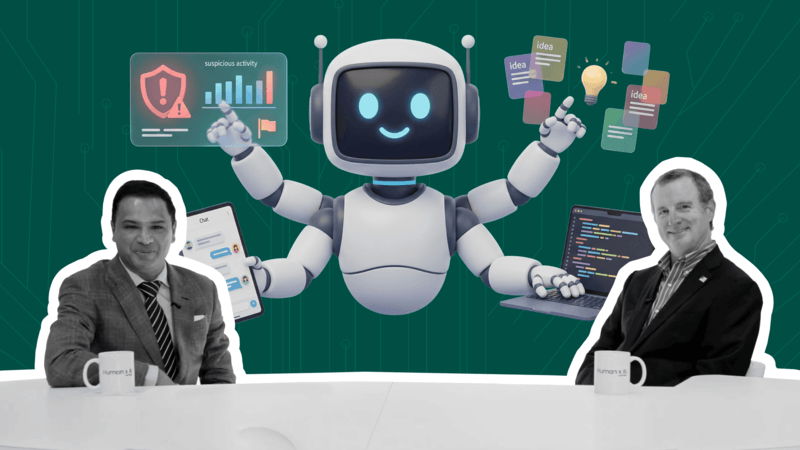
For a Credit Union serving rural Mississippi communities where many members are low-income and underserved, trust is hard to earn and easy to lose. When staff don’t have instant access to accurate internal information, service quality can vary, and a single bad interaction can undo years of relationship-building.
Casey Bacon, CEO of Statewide Federal Credit Union, has spent 35 years working nearly every job in the building, from teller to IT director to the corner office. That background shapes how he thinks about AI. He sees it not as a replacement for people, but as a way to multiply what they can do.
Statewide’s AI Assist tool gives every employee instant access to accurate internal information at the moment they need it. Bacon describes it as the biggest thing the Credit Union has done so far with AI, because it enables consistent service to members across the whole organization.
Statewide serves rural communities where many members are getting their first shot at traditional credit and escaping predatory lending. By handling information retrieval and background work, AI frees staff to focus on what actually matters to members: showing up in person, earning trust face-to-face, and helping people understand tools that might seem intimidating. (link)
2) Bay Federal CU unified its member data to power AI-driven growth
Bay Federal Credit Union was preparing to expand into a new market and open a new branch, but its technology wasn’t ready for the growth. Member data lived in silos, the team lacked a true marketing automation platform, and they had no single view of member behaviors, preferences, and engagement. The $1.8B Credit Union needed a platform that could unify data, support personalization at scale, and let business teams move without relying solely on IT.
Trisha Bennett, VP of Enterprise Applications, and SVP/CTO Richard Roark led the search for a solution. They chose Creatio’s no-code, AI-native platform and partnered with Solutions Metrix for implementation. Before building anything, they formed cross-functional committees pulling in stakeholders from marketing, lending, operations, and IT to map requirements together.
The rollout followed an MVP approach, starting with referral management for mortgages and investments in select branches. The first phase gave the marketing team the ability to personalize campaigns, segment members more effectively, and launch journeys powered by real-time data from the connected data warehouse.
The future roadmap expands across sales and service. Referrals for mortgages and investments will be tracked directly in the platform, processes will be standardized, and SLAs managed through Creatio. Conversational AI tools will let staff ask the system about a member instead of searching through records, and predictive tools will flag changes in direct deposits and identify members at risk of falling behind before issues escalate. (link)
3) The PenAir CIO’s strict vendor risk framework for an AI-era
When a member opens the PenAir Credit Union app, that single interaction touches over 25 vendors working behind the scenes. For a smaller institution without an army of software developers, stitching all of that together seamlessly while keeping it secure is one of the hardest parts of the job.
After spending 26 years in IT and 11 years navigating the complexities of financial services, CIO Galen Counselman advises building your risk framework BEFORE you need it.
PenAir follows the NIST 800 framework for risk assessments on every vendor and every system change. Counselman recommends getting your board to formally agree on a written risk appetite statement. At PenAir, that appetite is low, and it drives every vendor decision. When a vendor assessment lands at medium risk, PenAir gives them two options: make the changes needed to bring it down to low, or the relationship does not move forward (except in some cases with board approval). Management and the board vote on risk acceptance quarterly, so no single person is carrying that weight alone.
Counselman exercises caution around one AI red line: if a vendor uses member data to train its models alongside other clients, that remains a medium risk unless the vendor gives guarantees they won’t. (link)

Tips & Use Cases
Learn to apply AI…
ICCU boosts loan approvals 34% with Zest AI underwriting: Idaho Central Credit Union automated 75% of loan decisioning using Zest AI, cutting staff touchpoints on routine applications while dropping delinquency rates an additional 0.3% below their already sub-1% baseline. (link)
InTouch CU CEO on why he chose to be an early AI adopter: Kent Lugrand says an $800M Credit Union competing against Chase and Wells Fargo cannot afford to wait for others to go first. He partnered with Eltropy to deploy agentic AI that handles member tasks like fee reversals and address changes 24/7, serving members across all 50 states without adding staff. (link)
Fintech leaders share what’s working and broken in AI banking: At the AFT Spring Summit, executives from Praxent, Stratyfy, and Vine Financial discussed the real impact of AI on financial software development, with Vine Financial’s David Eads reporting 286% more code written MoM with Claude Opus 4.6. Leaders also warned that AI hallucinations pose serious risks in regulated environments, and urged institutions to ensure any AI deployment can be explained step-by-step to a regulator on-site. (link)
Hudson Valley CU’s CIO shares how to build an AI-ready foundation: CIO John Fede explains how the $8B Credit Union is migrating to a cloud-based data warehouse, deploying RPA, and hiring a Chief AI Officer to lay the groundwork before scaling AI use cases across the organization. (link)
SavvyMoney’s CEO on using AI to close the credit education gap: JB Orecchia argues that financial institutions can use AI to build member financial profiles that adapt over time. The goal is moving beyond static credit snapshots to deliver personalized guidance on rates, cash flow, and long-term borrowing costs. (link)
How to build custom GPTs for your Credit Union workflows: Open ChatGPT, click Create GPT, add your instructions and any reference documents, and you have a reusable tool in under five minutes. Keep each GPT focused on one task, avoid overly complex instructions, and use it for anything you do repeatedly, like board reports, job postings, or NCUA minute-taking. (link)
69% of banks & Credit Unions prefer buying AI over building it: A Digital Banking Report study of 200+ financial institutions found the preference is driven by limited data science teams, compliance complexity, and faster deployment needs. Only 8% of institutions had internal teams actively working on generative AI solutions. (link)
How Credit Unions can combine AI and human review to fight fraud: AI fraud systems continuously analyze device behavior, synthetic identities, and account patterns in real time, flagging threats before they spread. Human staff still verify flagged transactions directly with members, and industry groups like SAPTA help Credit Unions share intelligence across institutions. (link)
Answer engine optimization is changing how Credit Unions get found online: AI tools like ChatGPT and Gemini now replace traditional search results with direct answers. Credit Unions need to restructure website content into clear, concise question-and-answer formats so AI systems can cite them rather than bypass them. (link)
Aliya CEO on why always-on lending beats point-in-time decisions: Most lending AI is just automated hindsight, built on top of manual workflows. The Aliya platform connects cash flow data, behavioral signals, and post-origination monitoring into a closed loop that manages risk and identifies opportunities every day, not just at application. (link)
Major banks cut thousands of jobs as AI replaces back-office roles: HSBC is considering cutting up to 20,000 positions, roughly 10% of its workforce, with layoffs focused on non-client-facing service center roles. Morgan Stanley, Citigroup, BlackRock, and Block Inc. have also announced cuts. (link)
Bank of Ireland trains entire workforce on AI and data literacy: The bank is rolling out AI-immersion learning to all staff in 2026, with 1,200-plus employees already enrolled in its AI Academy. The investment is already showing results: AI prevented €9.7 million in fraud across 1 billion card transactions in 2025 and reduced contact center call transfers by 40%. (link)
RBC expects AI to generate up to $1B CAD in revenue and savings by 2027: Canada’s largest bank has rolled out AI across investment banking, consumer banking, and call centers, with research analysts now covering 1,700 companies, up from 1,500 in 2023. RBC ranked third on the 2025 Evident AI Index behind JPMorganChase and Capital One. (link)
AI shopping bots are coming and Credit Unions need a plan: Agentic AI tools from Google, Visa, and Amazon will soon make purchases directly from members’ bank accounts, creating chargeback gaps and new fraud vectors that existing regulations don’t fully cover. CUs need updated vendor contracts, bot-detection controls, and clear policies on which AI agents they will and won’t allow. (link)
Why Credit Unions should slow down before signing the next AI contract: Jim Bouchard warns that FOMO is driving Credit Unions to adopt AI before clearly defining the problem they’re solving, with hidden costs like data cleanup and staff retraining often delaying expected returns. He argues the bigger long-term risk is automating entry-level roles that have historically been the training ground for future leaders. (link)
Propel CEO says AI cash flow models should replace FICO for near-prime borrowers: FICO scores fail borrowers in the 650-700 range by relying on years-old data. Propel’s FreshLine product uses machine learning to analyze thousands of real-time variables, including income timing and cash flow patterns, to align repayment schedules. (link)
How Credit Unions can turn member data into personalized financial guidance: AI-driven personalization uses transaction history, app behavior, and declared goals to anticipate member needs before they ask. Banks excelling at personalization generate 5-15% more revenue from targeted campaigns. (link)
Treasury launches AI roundtable series for financial institutions: The Financial Stability Oversight Council and Treasury Department are hosting four roundtables bringing together banks, tech firms, and regulators to identify high-value AI use cases in fraud detection, credit underwriting, and operational risk. (link)
Starling Bank launches UK’s first agentic AI assistant for personal banking: Built on Google Gemini after eight years of development, Starling Assistant lets customers manage money, set savings goals, and complete banking tasks. It works through voice and natural language prompts directly inside the app. (link)

Funding Spotlight
Where the money is flowing for innovation…
Steward raises $5M to automate AML/KYC onboarding for complex investor structures: Its AI-driven workflow combines document collection, risk screening, and periodic reviews into a single process. Same-day onboarding is achieved in 80% of cases for fund-of-funds, family offices, and offshore trusts that traditionally require weeks of manual review. (link)
Eclypsium raises $25M to secure AI hardware and supply chain infrastructure: Funding will expand platform coverage across NVIDIA GPU servers, network edge devices, and enterprise hardware. Financial services and government sectors are the primary targets as AI infrastructure security becomes a growing priority. (link)
Allure Security raises $17M Series B to fight AI-powered brand impersonation at scale: Its platform analyzes over 10 million digital assets daily and identified impersonation attacks targeting more than 700 financial institution brands in 2025 alone. VyStar Credit Union is among its current customers. (link)
Oasis Security raises $120M Series B to govern how AI agents access enterprise systems: Machine identities now outnumber human ones 82 to 1, and most lack task-specific permissions. Oasis addresses that gap by assigning scoped access to AI agents and machine identities. (link)
Manifold raises $8M Seed round to monitor what AI agents do: Real-time visibility into autonomous agent behavior covers shell commands, API calls, and system access across enterprise endpoints. First-generation AI security tools only monitored model outputs, leaving this layer unaddressed. (link)

Keeping up with Tech
The latest in fintech and tools…
Mastercard builds transaction AI model while Visa pilots agent-initiated payments: Mastercard is training a large tabular model on hundreds of billions of anonymized transactions to improve fraud detection and reduce false alerts. Visa is testing AI agents that complete purchases within pre-set spending limits across 21 European bank partners. (link)
Obin AI launches to run auditable AI workflows inside financial institutions: Founded by former JPMorgan and Google AI executives, the platform executes end-to-end financial workflows within a firm’s own governance boundaries. Institutions retain full ownership of their data and models while producing traceable outputs. (link)
Mastercard launches agentic AI platform to replace specialist staff for small businesses: The Virtual C-Suite integrates with existing accounting, banking, and business software to analyze performance, flag risks, and recommend actions. It covers finance, marketing, and cybersecurity for small business owners who lack dedicated teams. (link)
Mastercard builds a large tabular AI model trained on billions of payment transactions: The model already outperforms standard fraud detection on edge cases like infrequent high-value purchases. It could eventually replace thousands of separate market-specific AI models Mastercard currently maintains across its network. (link)
Coinbase launches wallet infrastructure letting AI agents transact autonomously: The Agentic Wallets platform gives AI systems the ability to hold funds, execute payments, and trade digital assets independently within programmable spending caps and compliance controls. (link)
Vivi Money partners with Pismo to build AI-driven banking accounts in Australia: The fintech’s AI assistant connects to users’ bank accounts, loans, and retirement savings to provide real-time cash flow analysis and proactive reallocation recommendations. (link)
Feedzai launches RiskFM, a foundation model built for financial crime detection: Trained on $9 trillion in annual payments across 120 billion events, RiskFM matches the performance of manually engineered fraud models on day one. It covers card fraud to AML without custom feature engineering and outperforms single-institution models when trained across multiple institutions. (link)
Constant AI launches Nia to automate skip-a-pay requests end-to-end for Credit Unions: Deployed at MSUFCU, Nia handles eligibility checks, approvals, and core system updates across voice, chat, and text in minutes. Nia replaces manual queues that previously took three to five days and risked members going delinquent before processing. (link)
ChatGPT launches visual shopping with AI agents completing purchases end-to-end: OpenAI expanded its Agentic Commerce Protocol to support product discovery, letting users browse visually, compare options, and move toward checkout inside ChatGPT. Partners include Shopify, Walmart, Target, and Nordstrom. (link)

In Other News
Related news you can learn from…
Crypto.com cuts 12% of staff as AI replaces operational roles (link)
White House proposes light-touch AI regulation to boost innovation (link)
AI is shifting the competitive advantage from institutions to customers (link)
Aveni launches industry council to establish agentic AI governance standards (link)

Community Corner
Memes and visuals…

Thanks for reading!
Until next week,
— Credit Union AI Guy
Enjoying this newsletter? Forward it to a colleague who might appreciate practical AI insights.
Have a question or want to share your own AI experiment? Reply to this email or connect with us on LinkedIn. We’re building a community of curious Credit Union professionals. Come join the conversation!